


Mary’s Promotion - Word Game
4.12.26K Reviews
App Specs
- Version
- 2.0.4
- Updated On
- License
- Free
- Downloads
- 1,000,000+
- Developer
- Wonderful.Word
- Categories
- Word
- Platform
- Android
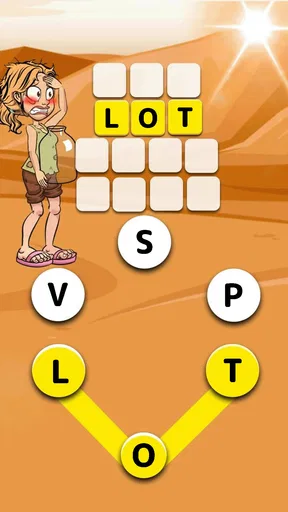
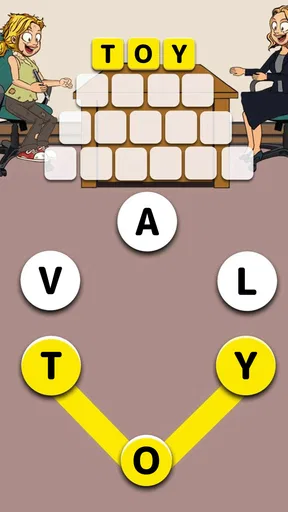
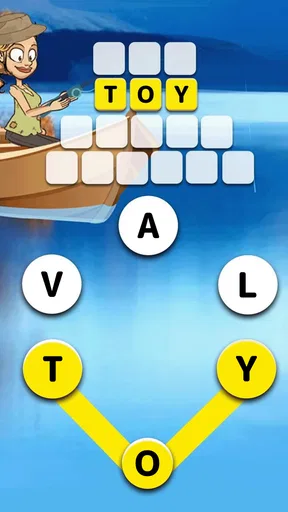
Screenshots
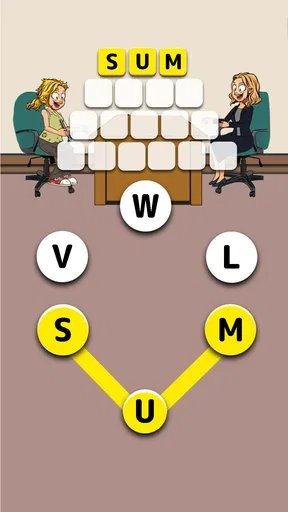
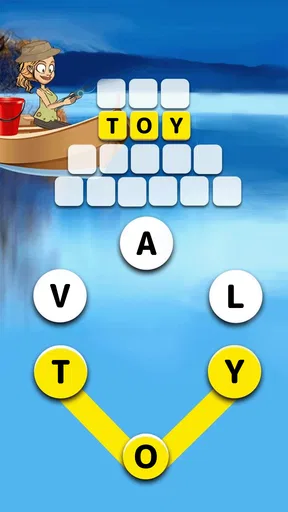
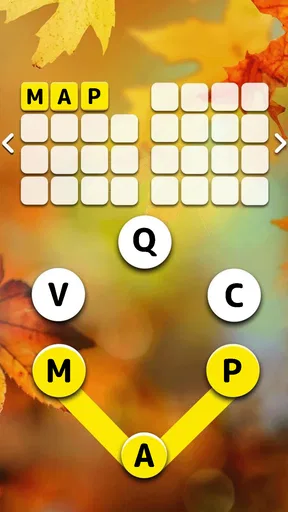
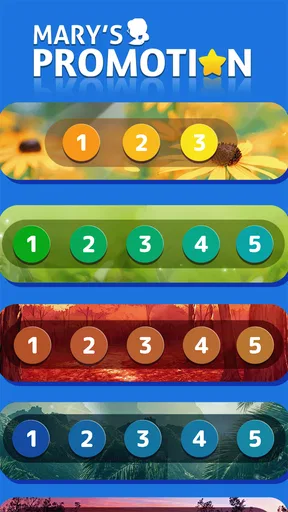
 Analysis by AppCompare
I approached Mary’s Promotion expecting a light word game, but its central idea gives each puzzle a little more purpose than a standard anagram session. Instead of treating every solved word as an isolated win, the game frames progress around Mary’s working life. That simple connection between vocabulary and advancement is the feature I kept noticing: it makes a familiar word challenge feel like a small sequence of decisions rather than just a pile of unrelated rounds.
The game comes from Wonderful.Word and sits in the word category for Android. It is free to start, carries a Teen content rating, and is available for devices running Android 6.0 or later. The current version is 2.0.4, while the game’s release date was January 25, 2019. Those details make it easy to place: this is an established mobile title, not a brand-new experiment, and its modest requirements should suit many older phones.
Why the promotion theme changes the word-game experience
The most important capability here is the way word solving is tied to Mary’s promotion. In many word games, the reward is simply another score, another streak, or another board. Here, the surrounding career theme gives the player a reason to care about moving forward. I found that useful during short sessions because the next puzzle felt connected to the previous one, even when I only had a few minutes available.
That structure does not turn the game into a business simulator, and I would not choose it for a deep story. Its strength is narrower and more practical: the theme gives context to repetition. When I solved a difficult arrangement, the satisfaction came not only from finding the answer but also from feeling that the result pushed Mary onward. For players who lose interest in abstract word grids, that extra layer can make a meaningful difference.
The store summary describes the experience as getting a new job with words, while the short description presents it as Mary’s promotion. I think the idea works best when read as a framing device rather than a promise of a complex workplace narrative. The game’s identity is still built around word play. The career angle simply gives the activity a destination.
The useful takeaway is that the theme supplies motivation, not complexity. If you enjoy word puzzles but need a small sense of progress to keep returning, this is more appealing than a completely context-free alternative. If you want character development, detailed dialogue, or a substantial plot, the promotion concept alone will not provide that depth.
How I use the progression during ordinary play
My preferred way to play is in short bursts: I open it while waiting, solve a few challenges, and stop before the session starts to feel like work. The promotion framing fits that routine because it gives each visit a clear emotional direction. I am not merely filling time; I am trying to complete the next step in Mary’s path.
Worth Reading Before You Choose

EA SPORTS FC Mobile 26 Is a Bigger Football Game, but It Takes Time

Flipboard Shows What News Apps Must Do Beyond the Feed

Switching to Android Auto Means Rethinking Your Driving Routine

Google Calendar Makes a Crowded Week Easier to Manage

Ludo King Makes the Most of the Minutes Between Plans

Baby Panda World Brings Quick Play to Modern Phones, but Its Game Library Feels Busy
That matters for attention. A conventional word game can become repetitive when every round has the same visual and emotional value. With this setup, the player has a reason to remember the broader run. Even when a particular puzzle is not especially memorable, the sense of continuation helps prevent the session from feeling disposable.
I also like the way the concept encourages patience. When I am stuck, I am less tempted to quit immediately because the obstacle feels like a temporary setback in a larger journey. That does not make every hard puzzle enjoyable, but it changes how I react to difficulty. Instead of judging the round only by whether I solved it quickly, I see it as part of the route toward the next promotion milestone.
For a beginner, I would suggest resisting the urge to rush through every puzzle. Read the available letters carefully, look for familiar endings and beginnings, and consider shorter words before assuming the answer must be complicated. The career theme can make progress feel urgent, but word games usually reward a calm scan more than frantic tapping.
A realistic use case for busy days
Imagine having a ten-minute break between errands or appointments. You want something more engaging than scrolling, but you do not want to commit to a long story, a multiplayer match, or a game that punishes you for leaving suddenly. This is where I see the clearest role for Mary’s Promotion. The word-focused format is easy to understand immediately, and the promotion goal gives the brief session a little continuity.
It also works well for someone who enjoys language but does not necessarily want a formal learning app. I would not describe it as a replacement for a dictionary or a structured vocabulary course. Still, the act of looking at letters from different angles can encourage flexible thinking. I sometimes noticed that the first word I saw was not the most useful one, and that stepping back for a moment helped me identify another possibility.
Another good scenario is shared casual play. One person can suggest possible words while another handles the device, turning a solitary puzzle into a small conversation. The promotion theme gives that exchange a natural subject: you are helping Mary move ahead rather than merely comparing raw scores. I would especially recommend this style for families or friends who like word challenges but do not want a competitive game dominated by speed.
There is a practical limitation, though. If your ideal break requires constant novelty, the underlying word-game loop may eventually feel familiar. The career context helps, but it cannot completely replace variety in the puzzles themselves. I would treat it as a dependable short-session game, not as a title designed to occupy every spare hour indefinitely.
What the free entry point means in practice
The game is free, which lowers the barrier to trying it. That is important for this type of experience because the promotion concept may appeal to one player and feel too lightweight to another. You can discover whether the word loop suits you before deciding whether it deserves a permanent place on your phone.
There are in-app purchases ranging from $0.99 to $99.99 per item. I would keep that range in mind before becoming deeply invested. A free download can still lead to spending choices, and the highest listed item is substantial enough that I would approach purchases deliberately rather than tapping through them casually.
My advice is simple: play first, decide later, and never treat a purchase as the solution to every difficult puzzle. The most satisfying part of this game is working through the words yourself. If you buy something, it should be because you already enjoy the experience and understand what the purchase adds, not because a single frustrating round has made you impatient.
This is also where Mary’s Promotion differs from a completely traditional paper crossword or a basic offline word puzzle. Those alternatives may offer a cleaner, less commercially structured experience. On the other hand, they usually do not give you the same character-centered reason to keep progressing. The choice depends on whether you value context and continuity more than simplicity.
Where the promotion concept has limits
The strongest trade-off is that the theme can make repetition easier to tolerate, but it cannot eliminate repetition. If you already know that you prefer word games with elaborate narratives, rich customization, or a large social layer, this may feel too focused. The promotion idea is appealing precisely because it stays compact; that same compactness may disappoint players looking for a broader game world.
I would also avoid judging it as a pure vocabulary test. The goal is not necessarily to prove that you know rare words. A player with strong pattern recognition may do well even without an unusually large vocabulary, while someone who knows many words can still get stuck if they approach the letters in a rigid way. That makes the game approachable, but it may frustrate people who want a precise educational measurement of language ability.
The Teen rating is another reason I would not position it as a children’s-first word game. Parents should consider whether the rating matches the age and maturity of the person using the device. For teenagers and adults, the rating is unlikely to be a concern in ordinary casual play, but it is still worth checking before handing the game to a younger child.
Device compatibility is reasonably broad because Android 6.0 is the minimum operating system. Even so, I would check the phone’s available storage and general condition before installing any game, especially on an older device. A low minimum OS requirement does not automatically mean every older handset will feel equally comfortable during use.
Small strategies that make the central idea work better
My first practical tip is to separate solving from judging. When I look at a puzzle, I initially search for common letter combinations instead of deciding too quickly that a word “looks wrong.” This is particularly helpful when the promotion goal makes me eager to advance. The theme creates momentum, but the best response to a block is usually a slower inspection, not random guesses.
Second, I recommend using the game as a reset between demanding tasks rather than as background noise. Because the promotion provides a small ongoing objective, it can hold attention better than an endlessly scrolling feed. I would play one focused session, put the phone down, and return later. That approach preserves the feeling of progress without turning a relaxing activity into another obligation.
Third, pay attention to your own reason for continuing. If you enjoy the words but feel indifferent toward Mary’s advancement, the game may still work as a straightforward puzzle title. If the progression is what keeps you engaged, then stopping at a natural milestone can be more satisfying than forcing a long session. In my experience, recognizing that distinction helps set realistic expectations.
A less obvious advantage is that the theme can make cooperative solving feel less like giving away answers. When another person suggests a word, they are helping with Mary’s next step, not simply spoiling a score-based challenge. That makes it a pleasant option for mixed-skill groups, where one player may have a stronger vocabulary and another may be better at spotting patterns.
How it compares with familiar word-game alternatives
Compared with a daily word puzzle, Mary’s Promotion offers a more continuous sense of movement. A daily format is excellent when you want one compact challenge and a firm stopping point. This game is better suited to players who want their solved words to contribute to an ongoing personal run rather than disappear when the day ends.
Compared with a crossword app, it is likely to feel more direct and less dependent on clues, general knowledge, or a large grid. That can make it friendlier for quick play, especially when you are tired. The trade-off is that crossword fans may miss the satisfaction of crossing answers and using clue relationships to confirm a solution.
Compared with a competitive word game, the promotion framing feels more personal than confrontational. You are not relying on another player’s mistake to make progress, and the experience is easier to fit around an unpredictable schedule. Players who thrive on timers, rankings, and head-to-head pressure may find it calmer than they want.
Finally, compared with a language-learning app, this is entertainment first. It may encourage useful word awareness, but I would not use it as my main tool for grammar, pronunciation, or systematic vocabulary study. Choose it when you want a playful word challenge with a character-centered objective, not when you need a measured course of instruction.
Who is most likely to enjoy it
I think the best audience is someone who likes word puzzles but needs a reason to return after the novelty of the first few rounds fades. The promotion theme is a good fit for casual players, commuters, students looking for a short mental break, and adults who enjoy language-based games without wanting a complicated interface or a demanding competitive schedule.
It is also a sensible choice for people who prefer progress that feels personal. Mary’s journey gives the game a warmer identity than a bare puzzle board, and that can make ordinary victories feel more connected. The developer, Wonderful.Word, has kept the concept easy to understand: solve words, keep moving, and see where the promotion path leads.
I would skip it if you want a substantial narrative, a serious vocabulary curriculum, or a game with deep multiplayer systems. I would also be cautious if in-app purchase prompts tend to tempt you into spending more than planned. The free entry point is useful, but the listed purchase range means budgeting still matters.
The game has built a solid audience, with over a million installs, an average rating of 4.1 from around nine thousand ratings, and roughly two thousand reviews. I read that as evidence of broad appeal rather than proof that every word-game fan will love it. Its audience seems to value the approachable puzzle loop and the promotion setup, while players seeking more sophisticated systems may reasonably look elsewhere.
My recommendation after spending time with it
I recommend Mary’s Promotion when you want a free word game with a clear personality and a gentle sense of direction. Its best feature is not that it reinvents word puzzles; it is that the promotion goal gives familiar solving a reason to feel cumulative. That makes short sessions more rewarding and can help the game stand out from anonymous letter challenges.
Go in expecting a focused word experience, not a full career simulation. Keep purchases intentional, remember the Teen rating, and use the promotion framing as motivation rather than as a promise of a large story. With those expectations, I found it easy to recommend to a friend who wants something thoughtful, compact, and simple to pick up.
For me, the deciding question is whether you enjoy the feeling of helping a small objective move forward. If the answer is yes, the career theme adds just enough emotional structure to make repeated word solving worthwhile. If you only want the deepest clues, the broadest vocabulary training, or the strongest competitive pressure, another word-game style will probably suit you better.
Pros
- Relaxing word puzzles suitable for short daily sessions.
- Simple controls make it accessible for casual players.
- Progressive challenges help maintain interest over time.
- Offline play is convenient when no internet connection is available.
- A family-friendly format makes it suitable for multiple age groups.
Cons
- Some levels may feel repetitive after extended play.
- Hints can reduce the challenge for experienced word-game fans.
- Difficulty may vary noticeably between consecutive puzzles.
- Ads may interrupt gameplay
- depending on the version installed.
- Players seeking competitive multiplayer may find the experience limited.
FAQs for Mary’s Promotion - Word Game
What is Mary’s Promotion - Word Game?
Mary’s Promotion - Word Game is a casual word puzzle designed around solving vocabulary challenges and helping Mary advance in her career. Players typically complete word-based levels, discover correct answers, and progress through an entertaining sequence of tasks. It is aimed at users who enjoy relaxed brain games, spelling practice, and short sessions that can be played whenever they have a few minutes available.
How do you play Mary’s Promotion - Word Game?
The main gameplay revolves around identifying, arranging, or connecting letters to form the required words. Each level presents a puzzle that must be completed before moving forward, with difficulty usually increasing as new stages are unlocked. Paying attention to the available letters and thinking of alternative word combinations is important, especially when the game introduces more challenging vocabulary or limited moves.
Is Mary’s Promotion - Word Game free to download and play?
Mary’s Promotion - Word Game can generally be downloaded without an upfront purchase, allowing users to try its core word puzzles at no initial cost. However, free mobile games may include advertising, optional in-app purchases, or paid items such as hints and extra resources. Before downloading, check the store listing for the current pricing, available purchases, and any restrictions that may apply.
Does Mary’s Promotion - Word Game require an internet connection?
The basic word puzzles may be playable without a constant internet connection, which makes the game convenient for travel, commuting, or areas with unreliable service. Nevertheless, an internet connection could be needed for advertisements, synchronization, updates, purchases, or certain online features. Availability can also vary between Android and iOS versions, so offline functionality should be confirmed on the relevant app-store page.
Is Mary’s Promotion - Word Game suitable for children and language learners?
The game may be suitable for older children, teenagers, and adults who enjoy simple vocabulary challenges, but suitability depends on the difficulty of its words, advertising, and any story-related content. Parents should review the age rating and privacy information before allowing younger players to use it. Language learners can benefit from practicing spelling and vocabulary, although the game should complement rather than replace structured learning.


